|
Home
Film
Film
& DVD Archive
Music
Music
Archive
Television
Sport
Features
Features
Archive
Food & Drink
Food & Drink Archive
Wijke's Weather
Weather
Specials
Contact
Crossword
Guestbook
Donations
Classifieds
Links
Link To Us
Forum
Maillist
Scribe Weekly
Radio
Dedications for Scribe Weekly
Radio
Write
for Scribe Weekly
|
The
Snowdon 
BY Wijke
Ruiter
The legend says that when creation was almost
finished, an enormous bag of rocks remained. Considering what to do
with it, God wandered around the earth, with the bag on His shoulders.
Suddenly the sack tore apart and all the rocks fell on the same spot:
Montenegro was born.
Probably the bag had already a few holes and some rocks were lost
before. God must have passed North Wales; Snowdonia Park: not a planned
creation, originated by accident; land behind Gods back. Magnificent and
pure and nature did the rest. With volcano activity; an Ice Age and
never ending erosion a serrated line of peaks arose, the Snowdon as
absolute queen of them all.
The one who expects a shady region; graceful
green slopes covered with mighty woods and lovely flowers along
rippling brooklets will be deceived. For the Snowdon area brings a
barren, desolate moonscape. Depressing black-grey rocks rise around in
all their might, leaving deep gaps, which never see any sun.
What on earth makes that place so popular? Who wants to go there?
Tourist guides report that the Snowdon is the highest mountain of
England and Wales. Will that simple fact alone attract the thousands? 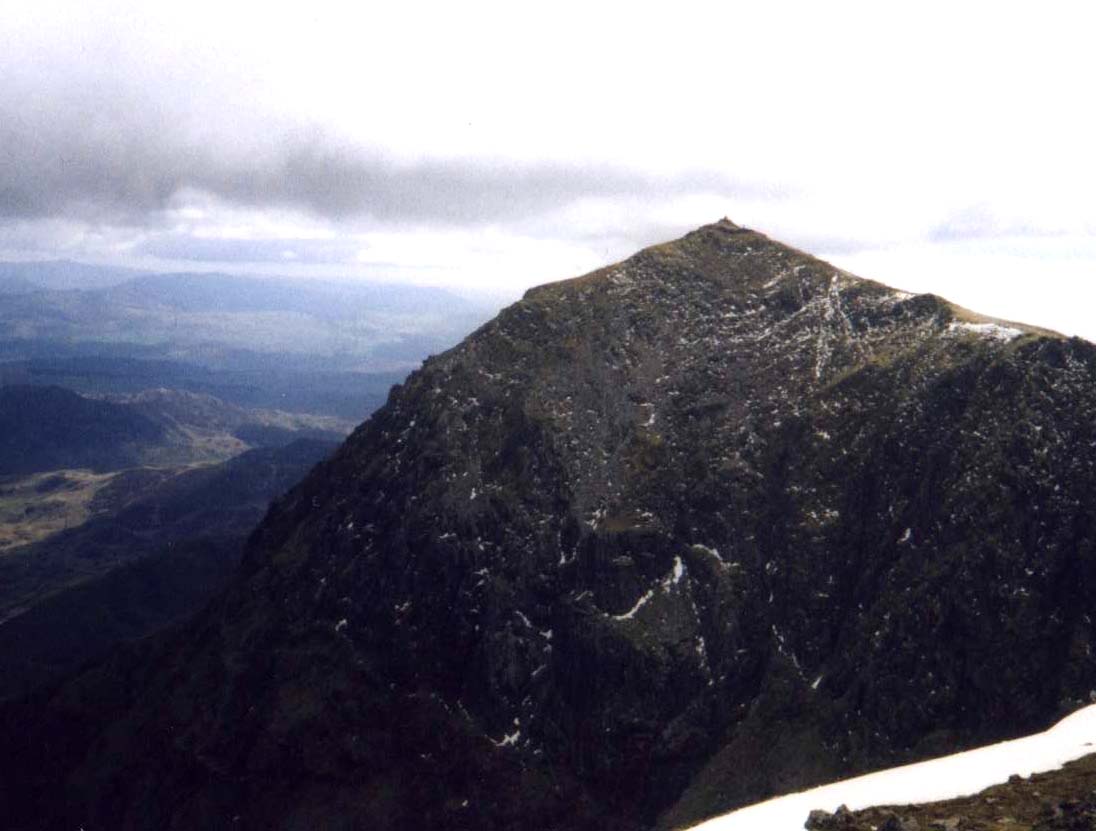
There’s
more about it: by scrambling and climbing those rocks you experience
the grace and power of nature that formed them. You’ve mastered them,
with every top you’ve reached, feeling like a champion. At the same
time they overwhelm you, realizing you’re so small and vulnerable.
Then there’s the view: lovely green Wales unfolds before you; sea;
lakes, hills, cascades and falls as far as you can see.
This
National Park, named after the puzzling Snowdon, deserves all the
respect of the world. You’ve got to be careful with such pieces of
nature; fortunately most people understand; even the RAF, based on
Anglesey, tiptoes over.
Our history
Last year my son went to Wales with his class.
He came back with enthusiasm, a big green-white-red dragon-flag, a
T-shirt - “I climbed the Snowdon, the hard way? and the statement:
“Mum, you’ve got to go there, I know you’re goanna love it?
Showed pictures: grey rocks, mist, drizzle; adding: “You seem to have a
great view when there’s no mist? Didn’t look very inviting though, but
I promised him we’d go together.
So to Wales we went. Took a boat from Rotterdam to Harwich; drove a
whole day across England and ended up in the North of Wales, the
Westside of Snowdonia Park.
The surroundings and paths
As real mountaineers the first thing we did is
exploring the region. We
had a few walks around, bought a good 1: 25.000 scale-map and a booklet
that seemed to be useful.
The booklet describes the “Six classic routes up Snowdon?and a seventh
one, known as the “horseshoe-walk?
The Snowdon is a peak of an ancient, extinct volcano
crater. The six paths to the top differ in difficulty; four of them
come from the “outside?of the crater-lake; are the easiest to climb
and two lead through the crater with the climbing part at the end.
The horseshoe-walk takes you over all the peaks and the ridges around
the crater.
This walk is the most challenging, and soon we
decided that it would be ours.
The north side gives the hardest work compared to the south side; and
the booklet suggested starting with the heavy north side-part. So we
went to bed early; an exciting day lying ahead.
The
Crib Goch
Today was the day. We got up early, listened to the weather forecast:
sunny spells, scattered heavy showers with hail and thunder. So not
much different from the weather at the previous days.With highly
pitched expectations we drove to the Snowdon massive. The mountains
concealed in the clouds; worrying us, and we had baseless hopes they
would disappear.But as known, clouds have a nasty habit to stick to
mountains, rather than simply vanish.
Arriving at the parking place at Pen-Y-Pass, the sun gave her best; and
we started our walk.
First the Pig Track; after about 1 mile the path to the Crib Goch –our
first peak to take - split to the right.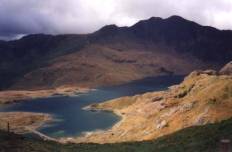
The scrambling became a little more serious; but we enjoyed it; the
view was already magnificent and the sun gave the support we needed……
until there was a broad gap.
”This is the wrong way? my son concluded. We went back, trying to find
another path.
20 feet above there seemed to be one; scrambling up; following a narrow
route until…a huge rock-face glanced at us. No footholds, no grip at
all.
We went on searching for about half an hour; scrambling bit-by-bit,
higher and higher. With a sudden shock I noticed the sun was gone and
it became considerably colder.
Instinctively my eyes went to the sky. “You see that sky coming??I
asked my son. “Yeah, a bit too blue, h? Mum??
And too blue it was: dark, grey and black lowering.
Suppose we reach the top, no shelter on these rocks;
thunderstorms with hail; it all crossed my mind. Silly Dutchies in an
unknown area, not used to mountains.
“How’s the path around that corner??I asked my son. No path, loose
scree. A hiding place somewhere? No place to hide, Mum. 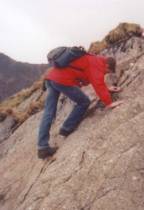 I saw the disappointment on his face; he knew
what the following message would be. I saw the disappointment on his face; he knew
what the following message would be.
I waited another ten minutes to tell; maybe there was a way out; but
there wasn’t. A light drizzle started. ”We’ll go back,?I said; sharing
my sons?feelings.
Descending is often more difficult than ascending. It was a tough
descend in silence; the drizzled rocks mourned with us. We finally
reached the path at the foot of the Crib Goch, walked down, my son a
few yards before me, his head down. Sadness upon him.
We reached the split of the Pig Track. “We can take that one,?I
proposed. “No, I’m tired?he answered. I knew that couldn’t be true;
he’s in the form to climb the Mount Everest.
The rain became more serious; wetting the rocky path; making the stones
slippery. 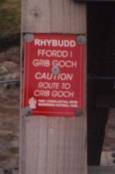 It was
half past two pm; we reached the parking place. It was
half past two pm; we reached the parking place.
A sudden dark voice said: “So you came back; that’s a sensible thing to
do? I looked in the stern face of a park ranger. More sensitive than I
thought, his face said. But his voice didn’t.
“You noticed you were the only ones on the Crib Goch? he had probably
been watching us; witness his binoculars. “No?I had to admit, though
we hadn’t met many people, “but I noticed the thunderstorm coming? “Me
too? and a sudden smile broke his severity. We rushed to the car in
the pouring rain. When we left the parking place we even got a
rangers-wink. “Lets see if the Llanberis bakery has some fresh scones?
my son loves them. So
do I.
“A bit of scrambling is needed, but except for
a loose surface there are no difficulties to expect? the booklet said
about the Crib Goch. I already knew the Brits have a natural sense for
understatement.
Tomorrow we’ll take the other side.
The Llywedd path
The next day sun and birds invited us early. At
nine we were on our walk to the south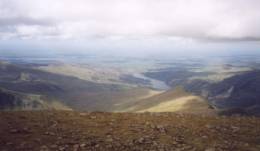 side of the Horsshoe-track; called the Llywedd path. Another scramble
waited but far not so heavy as the last one. The sun accompanied us
friendly; my son chattered cheerfully, the misery of yesterday totally
forgotten. We
reached the ridge and an open grassy plateau. Six sheep heads turned to
us, watching carefully. Beside us rose the east peak. Time to pause and
take some pictures.
side of the Horsshoe-track; called the Llywedd path. Another scramble
waited but far not so heavy as the last one. The sun accompanied us
friendly; my son chattered cheerfully, the misery of yesterday totally
forgotten. We
reached the ridge and an open grassy plateau. Six sheep heads turned to
us, watching carefully. Beside us rose the east peak. Time to pause and
take some pictures.
The paths to the east- and west-peaks are easy to find and not very
steep. From beneath the peaks look impregnable; well, they are not.
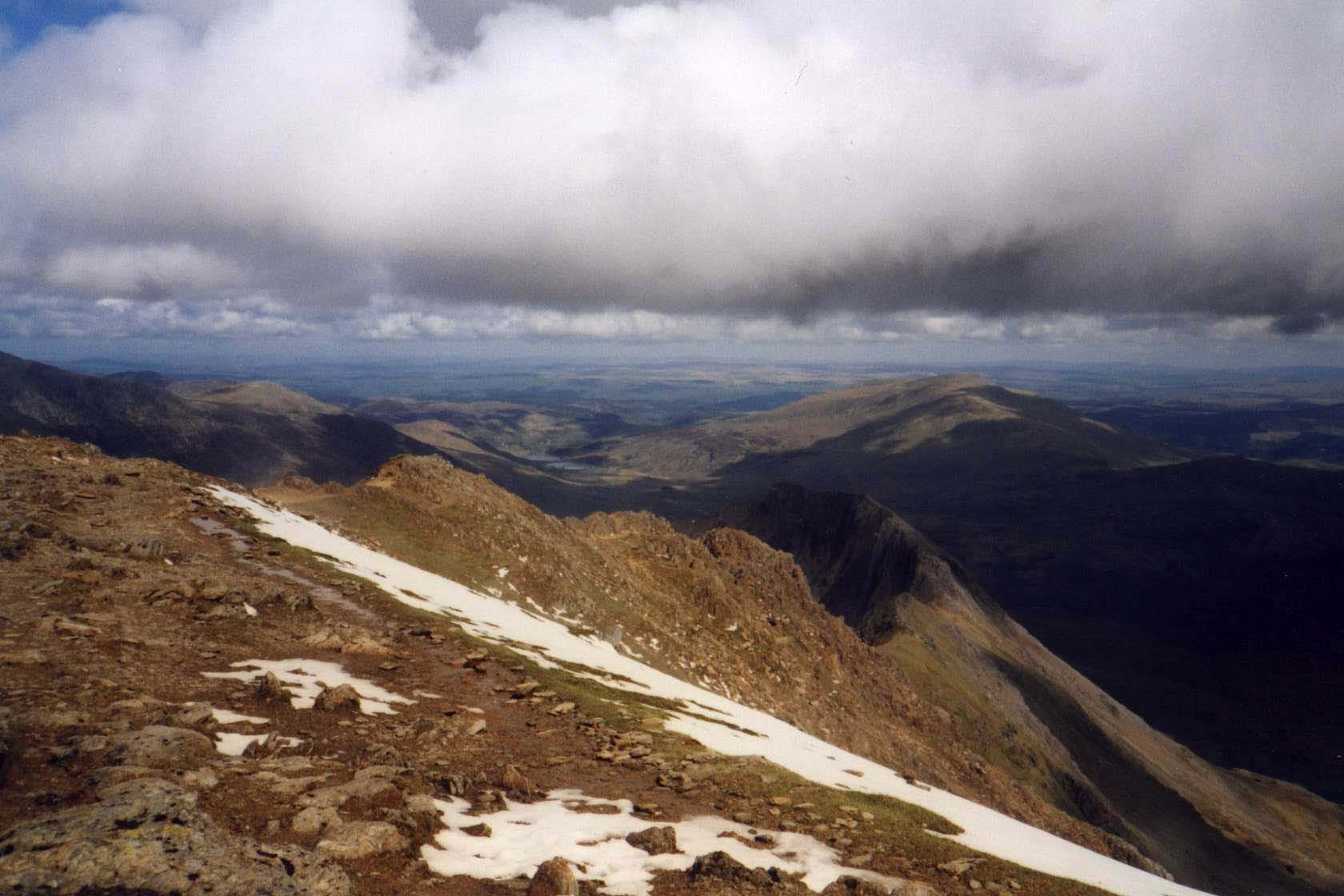
The view to the south is marvellous; in the valley a river meanders to
the sea, surrounded by green hills; which grow higher to the horizon;
cascades drawing silver lines. We just sat and watched, at least I did.
My boy was running around like a young dog, trying to find a way down
at the other side of the peak; a steep rock face of maybe 300 feet. I
tried hard to keep my mother-instincts for myself; not to warn him; not
to watch every step he took.
 ”I
don’t
think we can get down there? a sudden conclusion came. “Oh, really??
hoping he didn’t notice the relief in my
voice. ”I
don’t
think we can get down there? a sudden conclusion came. “Oh, really??
hoping he didn’t notice the relief in my
voice.
The path from the west-peak leads down about
300 feet to the junction with the “Watkin Path? which comes from the
south-valley. We scrambled down along the rocks, soon losing the path;
but that didn’t matter; we simply had to go down.
From the junction the Watkin path leads right to the top of Snowdon; a
black, quite steep track. Not long, I have to admit to be thankful for
that, but a dignifying final sprint to the top.
When we reached it, the clouds gave us a hearty welcome. Cold and misty
though, but we felt like champions: we did it!!
”Lets get a T-shirt; we deserve that? but the restaurant and the shop
were closed. It’s not the season yet.
Our booklet said that you can take the north-path of Horseshoe until
you reach the Crib Cogh and avoiding it you and can go down there.
“You’d like to try that??We had to move on, it was quite cold at the
Snowdon-top, not a good way for muscles to cool down.
At least we could walk to Snowdon’s competitor, Crib Y Ddysgl, only 20
metres lower.
From Snowdon the Miners Track looks quite inviting: a broad paved path
leads down.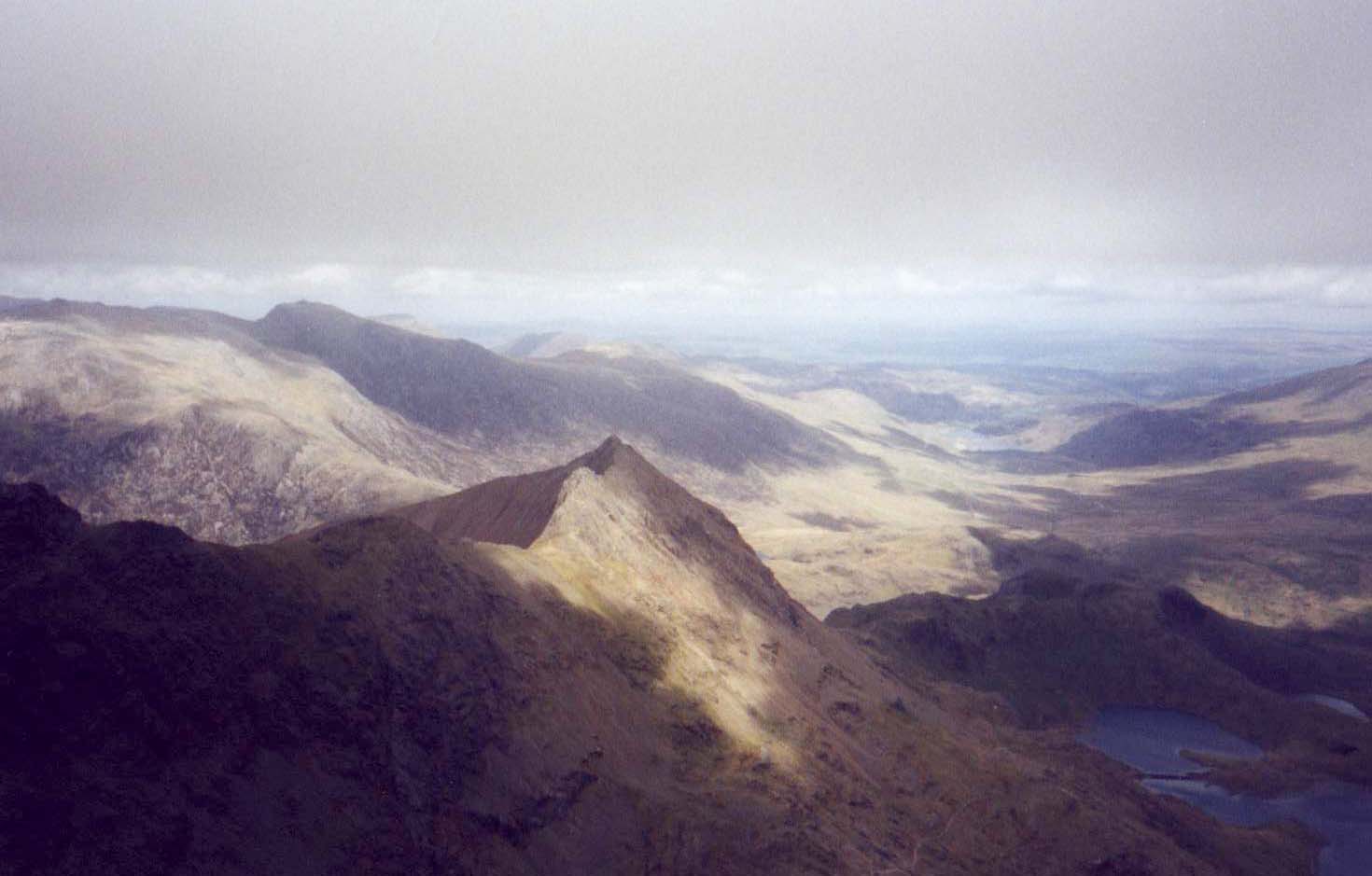 We went to
Crib Y Ddysgl, took pictures and went back: the Miners Track was
irresistible. We went to
Crib Y Ddysgl, took pictures and went back: the Miners Track was
irresistible.
After a mile the track lost its pavement but that’s how it should be!
We had a nice walk back to the parking place. The clouds died away and
the sun accompanied us the whole long way.
Off the westside of Crib Goch we looked up: here’s the place you can
come down from the Horseshoe according to our booklet; but with a
certain satisfaction we noticed that it was all fenced.
The paths around the lakes gave the impression of a lazy Sunday
afternoon park-walk; and so it felt; quite and lovely.Our loyal car
awaited us; it had been a perfect day.
There’s got to be a
morning after
”Lets visit Chester? I hopelessly try to raise my boy’s interest in
some culture. “You know I don’t like cities? “There are loads of
castles here? I proposed another option. “You go and visit castles
with dad, when you’re in Scotland?
What about the beach then? So the beach won. And the sun had made the
same choice. They Welsh beaches are sandy, like in Holland, but there
are also rocks, unlike Holland.
We played like children with sand, stones and the waves. Sat down and
woke up: suddenly a few hours were gone: the tide around my feet.
Lovely Wales.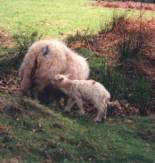
Archived features
mailto:wijke@scribeweekly.com
|